The Importance of Accessibility in Wellness Products and Spaces
Wellness is often sold as a universal pursuit — something everyone deserves. But walk into most spas, gyms, or yoga studios, and the reality tells a different story. The industry has a long-standing accessibility gap that affects millions of people, and closing that gap isn't just a matter of fairness. It's a matter of health.
What Accessibility in Wellness Actually Means
Accessibility in wellness goes far beyond installing a ramp at the entrance. It encompasses physical, sensory, cognitive, economic, and cultural dimensions — all of which determine whether a person can genuinely participate in wellness experiences.
Physical accessibility is the most visible layer: step-free entrances, wide doorways, adjustable equipment, and changing rooms that accommodate mobility aids. But sensory accessibility matters just as much. A spa filled with heavy fragrance or a gym with blaring music can be genuinely inaccessible to someone with sensory sensitivities, migraines, or certain neurological conditions.
Cognitive accessibility covers how information is presented — whether instructions are clear, whether staff communicate in ways that work for people with cognitive differences, and whether the environment feels psychologically safe. Economic accessibility acknowledges that premium wellness services are priced out of reach for many people who need them most. Cultural accessibility means that wellness spaces feel welcoming to people of different backgrounds, body types, and lived experiences.
When we talk about inclusive wellness, we're talking about all of these layers working together — not just one checked box.
Who Is Left Out of Mainstream Wellness?
The people most commonly excluded from wellness spaces include those with physical disabilities, chronic illness, neurodivergence, mobility limitations, and sensory differences — a group that, taken together, represents a significant portion of the population.
According to the CDC, roughly one in four adults in the United States lives with some form of disability. Add people managing chronic conditions like fibromyalgia, autoimmune disorders, or chronic fatigue syndrome, and the number of people who encounter barriers in wellness environments grows considerably.
Neurodivergent individuals — including those with autism, ADHD, or sensory processing differences — often find mainstream wellness spaces overwhelming rather than restorative. People who use wheelchairs, canes, or other mobility aids frequently encounter facilities that are technically "ADA compliant" but still practically difficult to navigate. Caregivers accompanying someone with high support needs face their own set of logistical barriers.
The gap matters because these are exactly the populations for whom access to wellness resources — stress reduction, physical activity, restorative practices — can be most impactful. Exclusion doesn't just sting. It compounds existing health disparities.
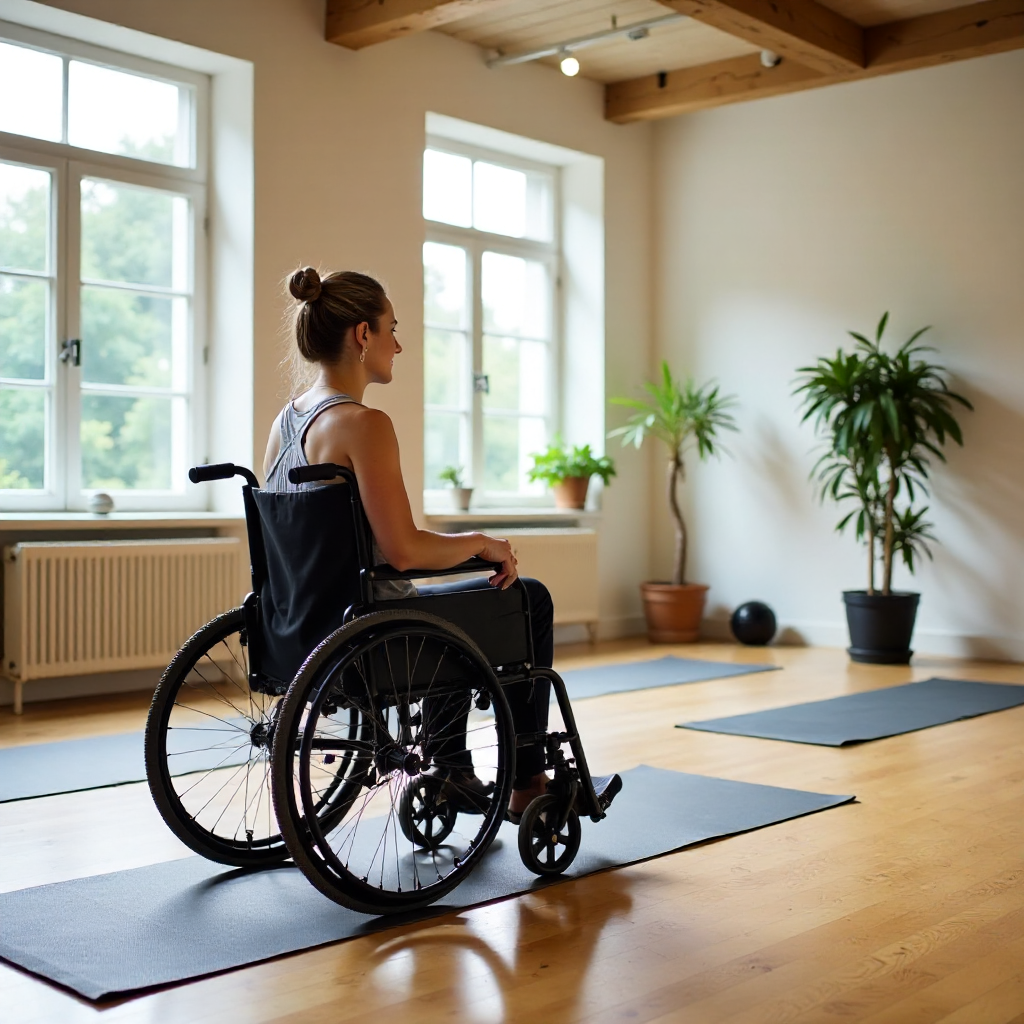
Common Barriers in Wellness Spaces
Real barriers in wellness environments tend to cluster around four areas: physical infrastructure, sensory environment, equipment limitations, and staff training.
Physical infrastructure problems are often obvious in retrospect but overlooked in design. Narrow locker room aisles, pool lifts that are broken or absent, treatment tables that don't lower enough for safe transfer, and restrooms that technically meet minimum code but offer little practical usability — these are routine frustrations for people with mobility limitations.
The sensory environment is a subtler but equally significant barrier. Many wellness spaces lean heavily into fragrance — scented candles, essential oil diffusers, cleaning products with strong chemical smells. For people with fragrance sensitivities, asthma, or chemical sensitivities, these environments can trigger genuine health reactions, not just mild discomfort. Bright overhead lighting, loud music, and visually busy decor create similar problems for those with sensory sensitivities or neurological conditions.
Equipment is another sticking point. Most gym equipment, massage tables, and fitness props are designed for a narrow range of body types and mobility levels. Adaptive equipment — resistance bands with easier grip options, chairs for seated exercise, bolsters and blocks in various sizes — is often an afterthought rather than a standard offering.
Staff training gaps may be the hardest barrier to see from the outside. Well-meaning practitioners who haven't learned to communicate with deaf or hard-of-hearing clients, or who don't know how to safely support someone with a chronic condition, can create experiences that feel unsafe or unwelcoming even when the physical space is fine.
Accessibility Challenges in Wellness Products
Wellness products present their own distinct set of access barriers, often hiding in plain sight on the product shelf.
Packaging is one of the most common culprits. Pump dispensers that require significant grip strength, twist caps that are difficult for people with arthritis or limited hand mobility, and small print on labels that's unreadable for people with low vision — these design choices quietly exclude a large segment of potential users. The irony is that many of these people are specifically seeking wellness products to support their health.
Formulations matter too. Products with long ingredient lists full of synthetic fragrances or common allergens create real risks for people with sensitivities or immune conditions. The wellness industry's love of "natural" doesn't automatically mean accessible — essential oils, for example, can be potent triggers for fragrance-sensitive users.
Instructions and marketing present cognitive access challenges. Dense, small-font instructions written at a high reading level, or video tutorials without captions, leave out users with cognitive differences or hearing loss. Marketing that exclusively features one type of body, ability, or lifestyle signals to many potential customers that the product isn't meant for them — which shapes purchasing decisions even before someone reads a label.
The Principles of Inclusive Wellness Design
Universal design offers the most practical framework for making wellness spaces and products genuinely accessible. The core idea is simple: design for the widest possible range of users from the start, rather than retrofitting accommodations later.
The seven principles of universal design — equitable use, flexibility in use, simple and intuitive operation, perceptible information, tolerance for error, low physical effort, and size and space for approach and use — translate directly into wellness contexts.
In practice, this looks like: offering classes in multiple formats (in-person, online, seated, standing), providing products in packaging that works for varied grip strength and dexterity, creating fragrance-free options as a standard line rather than a specialty item, and training staff to ask about needs rather than making assumptions.
One underappreciated insight from universal design: accommodations built for people with disabilities routinely improve experiences for everyone. Curb cuts were designed for wheelchair users and became essential for cyclists, parents with strollers, and delivery workers. The same logic applies to wellness — a fragrance-free spa option benefits people with sensitivities, people who are pregnant, and anyone who simply prefers a cleaner scent environment.
Why Accessibility Is a Wellness Issue, Not Just a Compliance Issue
Framing accessibility as a legal checkbox misses the point entirely. The real argument is a health equity argument: when people are excluded from wellness resources, their health outcomes suffer in measurable ways.
People with disabilities and chronic illness already face significant health disparities — higher rates of depression, anxiety, cardiovascular disease, and preventable complications. Many of these disparities are worsened by reduced access to the very spaces and products designed to support health: gyms, mindfulness studios, therapeutic treatments, and restorative personal care routines.
Psychological safety is part of this equation. Walking into a wellness space and feeling that it wasn't designed with you in mind — that your body, your needs, your mobility aid are an inconvenience — is not a neutral experience. It creates a barrier to engagement that compounds over time. People stop trying. That withdrawal has real health consequences.
Health equity in wellness means recognizing that the people who face the most significant barriers to access are often those who stand to benefit most from what wellness has to offer. Closing that gap isn't charity. It's good public health.
How to Advocate for and Choose More Accessible Wellness Options
Whether you're a consumer, a practitioner, or someone who advocates for inclusive design, there are concrete steps you can take right now.
As a consumer, look for wellness spaces that list specific accessibility features on their website — not just "we welcome everyone," but actual details about step-free access, fragrance policies, adaptive equipment, and staff training. Ask direct questions before booking: "Do you have a pool lift?" "Is your space fragrance-free or low-fragrance?" "Can sessions be adapted for someone who uses a wheelchair?" Specific questions get specific answers.
When evaluating wellness products, check packaging for ease of use before purchasing. Look for brands that offer fragrance-free formulations, large-print labels, or pump dispensers. Brands that feature diverse abilities in their marketing are more likely to have thought about inclusive formulation and design — though this isn't a guarantee, it's a useful signal.
As a practitioner or business owner, accessibility audits don't have to be overwhelming. Start with the most common barriers: Is your entrance step-free? Can someone in a wheelchair use your restroom independently? Do you have a fragrance policy? Is your website accessible to screen readers? Each improvement matters, and progress is more valuable than waiting for perfection.
Involve people with disabilities in the process. The most effective accessibility improvements come from listening to the people who encounter barriers, not from guessing what they need. Community feedback, advisory panels, and direct outreach to disability and chronic illness communities produce better outcomes than top-down redesigns.
As an advocate, support businesses that prioritize inclusive design with your spending and your voice. Leave reviews that specifically mention accessibility features — positive and negative. Engage with wellness brands on social media when they miss the mark, and acknowledge publicly when they get it right. Consumer pressure has driven meaningful change in other industries, and wellness is no different.
Frequently Asked Questions
What makes a wellness product considered accessible?
An accessible wellness product is one that can be used independently by people with a wide range of physical, sensory, and cognitive abilities. This includes packaging that requires minimal grip strength, instructions written in plain language with large font, formulations free from common allergens and synthetic fragrances, and marketing that reflects diverse users. No single feature defines accessibility — it's the combination that matters.
How can someone with a disability find accessible wellness spaces?
Start by searching for businesses that explicitly list accessibility features on their websites. Organizations like local disability resource centers often maintain referral lists. Calling ahead to ask specific questions — about equipment, staff training, and physical layout — is more reliable than relying on general statements. Online reviews from disability communities can also be a valuable resource.
What is universal design and how does it apply to wellness?
Universal design is an approach to creating products and environments that work for the broadest possible range of people, without requiring special adaptations. In wellness, it means designing studios, products, and services that accommodate different body types, mobility levels, sensory needs, and cognitive styles from the ground up — rather than adding accommodations as an afterthought.
Are accessible wellness products more expensive?
Not necessarily. Many accessible design features — clear labeling, pump dispensers, fragrance-free formulations — add minimal cost. Some specialized adaptive products do carry a premium, often because they're produced in smaller volumes. As demand for inclusive design grows, prices tend to normalize. Choosing accessible products when they're comparably priced also signals market demand, which encourages broader adoption.
How can wellness brands improve their accessibility practices?
The most effective starting point is direct engagement with disability and chronic illness communities — through advisory boards, user testing, or simply listening to customer feedback. Brands can audit their existing products for packaging usability, fragrance load, and label readability. Reviewing marketing materials for representation, adding captions to video content, and making websites screen-reader compatible are all practical steps that don't require a complete product overhaul.
Accessible wellness isn't a destination — it's an ongoing practice. The brands and spaces that treat it as a continuous commitment, rather than a one-time compliance exercise, are the ones that build genuine trust with the communities they serve.