How to Build an Inclusive Wellness Routine That Works for Your Unique Needs
Wellness advice often assumes you have a fully able body, a flexible schedule, a gym membership, and a pantry stocked with trendy superfoods. For millions of people — those living with chronic illness, disability, neurodivergent minds, or simply different cultural backgrounds — that advice lands somewhere between useless and alienating. An inclusive wellness routine starts from a different premise: your body, your life, your rules.
What Does an Inclusive Wellness Routine Actually Mean?
An inclusive wellness routine is one designed around your actual circumstances — not an idealized version of them. It rejects the one-size-fits-all model that dominates mainstream health content and instead treats wellness as a spectrum of small, consistent actions that add up over time.
The traditional wellness industry has a visibility problem. When every yoga ad features the same body type, and every meal plan ignores cultural food traditions, it sends a quiet message: this isn't for you. Inclusive wellness pushes back against that. It recognizes that a person managing chronic fatigue and a competitive athlete both deserve a path to feeling better — just very different paths.
This approach draws on principles from adaptive fitness, culturally sensitive self-care, neurodiversity-affirming mental health practices, and accessible nutrition. None of those require expensive products or perfect circumstances. They require honest self-knowledge and a willingness to experiment.
Start With a Self-Assessment — Not a Trend
Before building any routine, audit your actual needs, limitations, and values — not what's currently popular on social media. A self-assessment takes about 20 minutes and saves months of following advice that was never meant for you.
Ask yourself four questions:
- Physical reality: What does my body comfortably do today? Where are my genuine limits — pain, fatigue, mobility?
- Mental and emotional baseline: Am I dealing with anxiety, depression, trauma, or sensory sensitivities that affect how I engage with self-care?
- Cultural and personal values: Which wellness practices feel natural to my background, and which feel borrowed or performative?
- Practical constraints: What time, money, and energy do I actually have — not in theory, but on a typical Tuesday?
The goal here isn't to list your limitations and feel discouraged. It's to build on what's real. Someone with fibromyalgia who walks for 10 minutes three times a week and sleeps eight hours is practicing wellness. Someone with ADHD who uses body-doubling to meditate for five minutes is practicing wellness. The metric isn't duration or intensity — it's consistency and fit.
Adaptive Movement for Every Body and Ability Level
Adaptive movement means finding physical activity that works with your body's current capacity, not against it. For people with physical disabilities, chronic illness, or fluctuating energy levels, this isn't a compromise — it's a smarter approach to staying active.
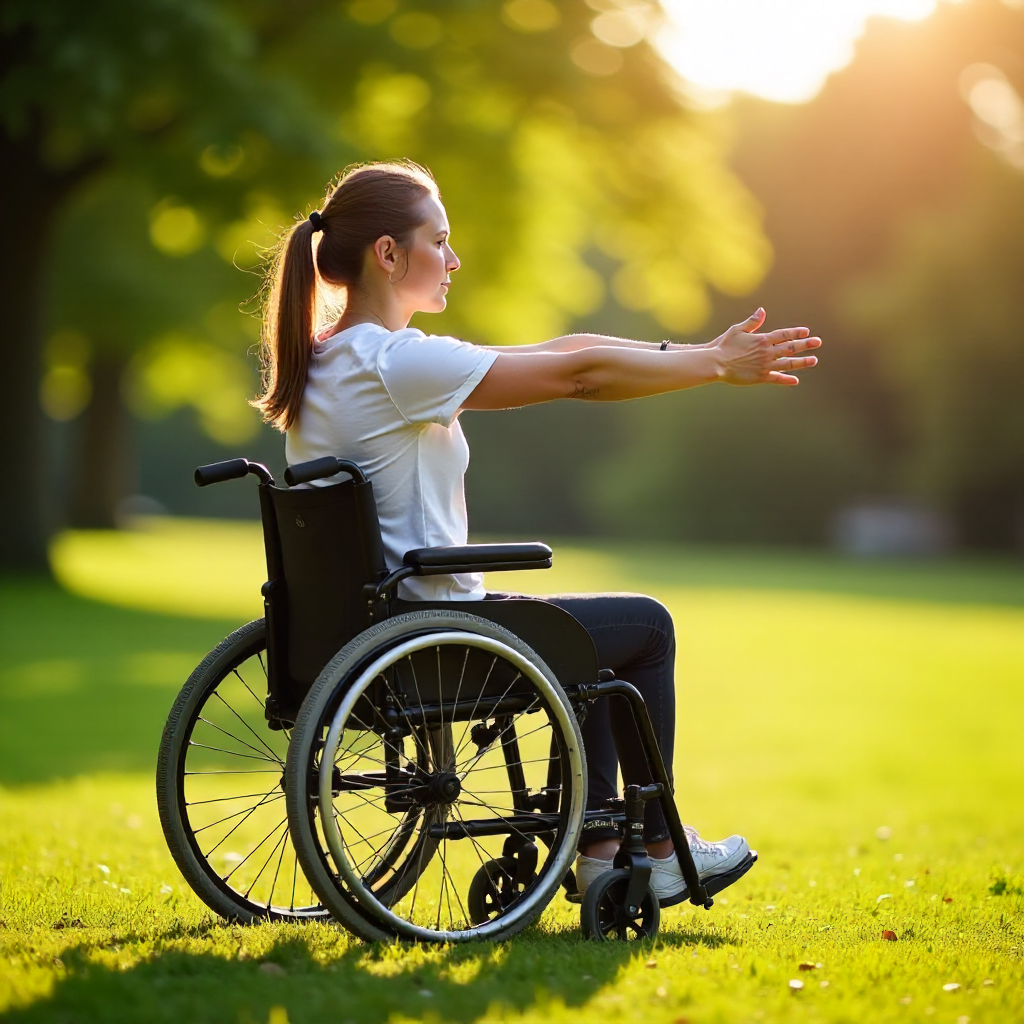
The range of options is wider than most people realize:
- Chair-based exercise — strength training, yoga, and cardio are all available in seated formats, with thousands of free videos online
- Pool movement — water reduces joint impact dramatically, making it accessible for arthritis, fibromyalgia, and post-surgical recovery
- Gentle yoga and breathwork — both can be done lying down and modified for almost any physical limitation
- Micro-movement — five-minute walks, desk stretches, and standing breaks count, especially on low-energy days
For people with chronic illness, the concept of energy management matters here. Pushing through a workout when your body is signaling exhaustion often leads to crashes that set you back days. Listening to those signals isn't weakness — it's data. On high-energy days, do more. On low ones, a short walk or gentle stretching is a genuine win.
Nourishing Your Body With Cultural and Dietary Diversity in Mind
Inclusive nutrition means eating in a way that honors your health needs, cultural traditions, budget, and relationship with food — without forcing anyone into a single dietary framework. There is no universally correct way to eat.
Mainstream nutrition advice frequently centers Western, high-income food cultures. But a dal-based diet rich in lentils and spices, a traditional Japanese approach emphasizing fermented foods and fish, or a Caribbean diet built around plantains and legumes can all be deeply nutritious. Cultural food traditions often encode generations of wisdom about what works for a particular body and environment.
A few practical anchors for accessible nutrition:
- Focus on whole foods you already know and enjoy — novelty is not a nutritional requirement
- Budget-friendly staples like beans, eggs, frozen vegetables, and oats deliver strong nutritional value at low cost
- If you have dietary restrictions due to health conditions, work with a registered dietitian rather than relying on elimination trends
- Reject the idea that eating "well" requires expensive supplements or specialty products
The U.S. Department of Agriculture's Nutrition.gov offers free, evidence-based guidance that covers a range of dietary patterns — a useful starting point for anyone navigating nutrition without professional support.
Mental and Emotional Wellness Across Neurotypes and Life Experiences
Mental wellness practices need to fit your neurotype and life history, not a generic template. What calms an anxiety-prone neurotypical person may feel overwhelming or ineffective for someone with ADHD, autism, PTSD, or sensory processing differences.
Traditional mindfulness meditation, for example, asks you to sit still and focus on breath. For many neurodivergent people, that's genuinely difficult — and being told to "just keep trying" can reinforce the feeling that you're failing at wellness. Alternatives that achieve similar outcomes include:
- Walking meditation — movement anchors attention more effectively for many ADHD minds
- Guided imagery — provides structure for those who struggle with open-ended focus
- Journaling — externalizes internal noise in a low-stimulation format
- Creative expression — drawing, music, or craft as emotional processing
Trauma history also shapes which practices feel safe. Breathwork, for instance, can trigger dissociation in some trauma survivors. If a practice consistently feels bad — not just uncomfortable, but genuinely distressing — that's important information. You're allowed to set it aside.
For those with access to mental health support, the National Institute of Mental Health provides resources for finding culturally competent care across a range of needs and backgrounds.
Rest, Recovery, and the Wellness Practices Often Left Out
Rest is not the absence of wellness — it is one of its most essential components. Sleep, deliberate downtime, and low-stimulation recovery are especially critical for people with chronic illness, sensory sensitivities, or high cognitive loads.
Hustle culture has made rest feel like laziness. But physiologically, rest is when the body repairs tissue, consolidates memory, and regulates hormones. Cutting sleep to make time for a workout is a bad trade for most people — and a particularly damaging one for those managing conditions like ME/CFS, lupus, or long COVID.
Practical rest practices worth building in:
- Sleep consistency — going to bed and waking at the same time stabilizes circadian rhythm more than sleep duration alone
- Sensory downtime — for those with sensory sensitivities, scheduled quiet time in a low-stimulation environment is restorative, not indulgent
- Active recovery — gentle stretching, slow walks, or restorative yoga on rest days keeps the body moving without taxing it
- Saying no — protecting energy by declining non-essential commitments is a legitimate wellness strategy
Building Your Routine — Flexible, Forgiving, and Truly Yours
A personalized wellness routine is built through iteration, not perfection. Start small, test what works, adjust based on real feedback from your body and life — then build from there.

A simple framework: choose one practice from each of three categories — movement, nourishment, and mental or emotional care — and commit to them for two weeks. Keep the bar low enough that you can hit it on your worst day. That's your baseline. Everything above it is a bonus, not a requirement.
Flexibility is a feature, not a flaw. A routine that adapts to a flare-up, a hard week at work, or a change in season is more sustainable than one that demands rigid compliance. Give yourself explicit permission to scale down without abandoning the routine entirely. Doing 10% of your usual practice is infinitely better than doing nothing because you couldn't do 100%.
Wellness is deeply personal. The routine that works for your neighbor, your favorite influencer, or your doctor may not work for you — and that's completely fine. The goal is a life that feels more manageable, more nourishing, and more yours. You get to define what that looks like.
Frequently Asked Questions
Can I build a wellness routine if I have a chronic illness or disability?
Yes — and in many ways, adaptive wellness practices were designed with exactly these circumstances in mind. The key is starting from your current capacity, not an idealized one. Chair-based exercise, paced activity, and low-stimulation rest practices are all legitimate components of a wellness routine. Always consult your healthcare provider before starting new physical activities if you have a diagnosed condition.
How do I make wellness practices more culturally relevant to me?
Start by identifying what already exists in your cultural background — traditional movement practices, communal meals, spiritual or contemplative rituals, herbal remedies. These often have deep wellness value that mainstream content ignores. You don't need to adopt practices from other cultures to have a rich self-care life.
What if I can't afford gym memberships or wellness products?
Most effective wellness practices are free. Walking, bodyweight movement, cooking whole foods, sleeping consistently, journaling, and breathing exercises cost nothing. YouTube has thousands of free adaptive fitness and meditation videos. Public libraries often provide free access to wellness apps and audiobooks. Financial constraint is real, but it doesn't lock you out of wellness.
How do I adapt a wellness routine during high-stress or low-energy periods?
Pre-decide your minimum version. When life gets hard, you shouldn't have to figure out what to cut — you should already know. A five-minute walk, one nourishing meal, and eight hours of sleep might be your floor. That floor keeps you connected to the routine without demanding energy you don't have.
Is there a "minimum" wellness routine that still makes a difference?
Yes. Research consistently shows that even modest, consistent actions produce meaningful health outcomes. Seven to nine hours of sleep, 20-30 minutes of gentle movement most days, and one or two genuinely nourishing meals are enough to support baseline physical and mental health for most people. Small and consistent beats ambitious and sporadic every time.